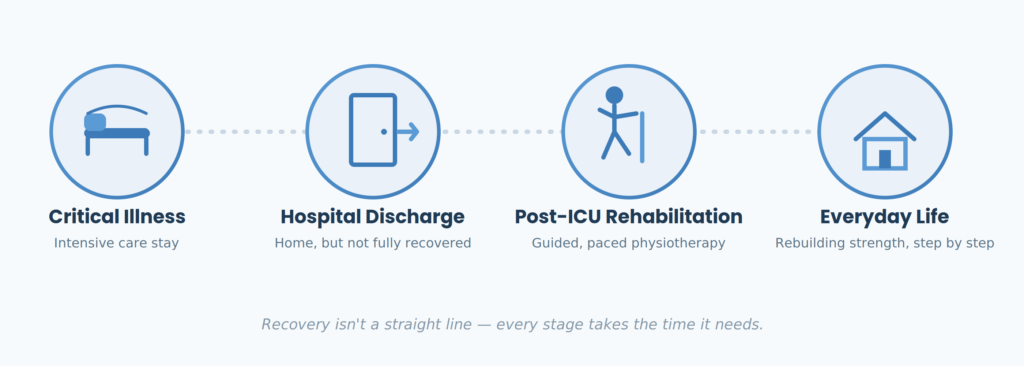
Maybe you or someone close to you has just come home after a stay in intensive care. You might have expected the hardest part to be over once the discharge paperwork was signed. For a lot of people, it isn’t that simple. If you feel surprised by just how weak, breathless, or foggy-headed you still are weeks later, you’re not imagining it. You’re also not alone — this is exactly why post-ICU rehabilitation exists.
Why Recovery Doesn’t Stop at the Hospital Door ?
Critical illness takes a real physical toll, whatever the original cause — severe infection, major surgery, respiratory failure, or something else entirely. Even a week or two of immobility in a hospital bed can cause substantial muscle loss. Add sedation, ventilation, and the sheer stress critical illness places on the body, and the result is common: people come home unable to do things that used to be automatic. Climbing stairs. Carrying shopping. Standing at the sink long enough to wash up.
This collection of after-effects has a name: post-intensive care syndrome, often shortened to PICS. It can include physical weakness, fatigue that doesn’t lift with rest, and for some people, difficulty with memory or concentration. None of this means your recovery has gone wrong. It’s a well-recognised, expected consequence of what your body has been through — not a sign you’re healing badly
Where Post-ICU Rehabilitation Fits In?
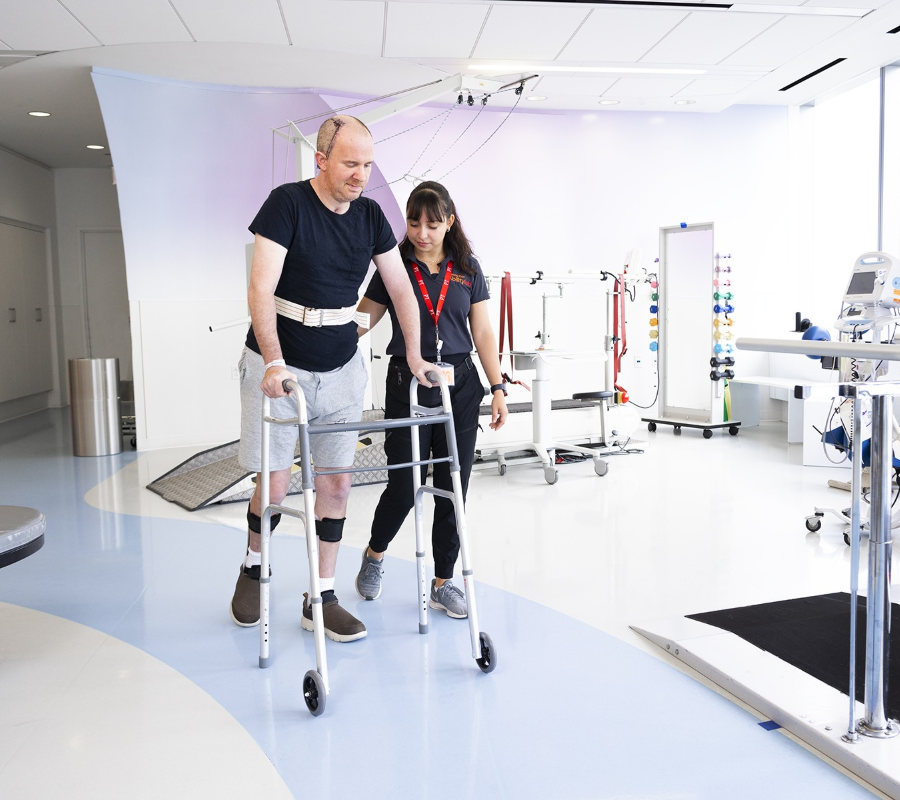
This is exactly the gap post-ICU rehabilitation is built to close. It isn’t generic exercise advice. It’s a structured, physiotherapist-led programme that accounts for what your body has actually been through, pacing activity carefully so you rebuild strength without overwhelming a system still under strain.
A typical programme focuses on:
- Rebuilding basic strength and mobility, starting from where you are now — not where you were before you became unwell
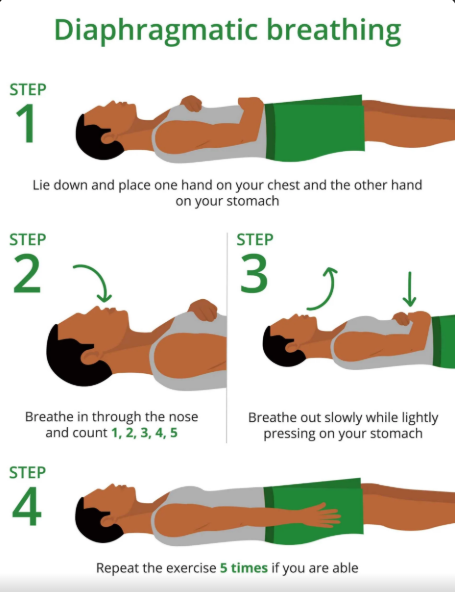
- Breathing-focused work, especially if ventilation or your lungs were affected directly
- Practical, everyday goals: managing stairs, getting dressed without exhaustion, walking further before needing to stop
- Honest pacing, because pushing through fatigue after critical illness can set recovery back rather than speed it up
Why Post-ICU Rehabilitation Often Gets Missed
Post-ICU rehabilitation is a genuine specialism. Not every physiotherapy clinic offers it. General MSK-focused physiotherapy, built around sports injuries and joint pain, calls for a different skill set entirely from understanding what a body has been through after critical illness. This is part of why patients often fall through a gap: not unwell enough to stay under hospital care, but not yet recovered enough to simply “get back to normal” alone. Organisations like ICUsteps exist precisely because this gap is so widely recognised across the UK, offering peer support to patients and families navigating exactly this stage of recovery.
Home Visits, When Travel Itself Is the Barrier
For many people early in this recovery, even the idea of travelling to a clinic feels exhausting. That’s why we offer home visits alongside clinic appointments. Rehabilitation can start exactly when it’s needed, without adding one more obstacle to an already difficult stretch.
If This Sounds Familiar
Weeks or months on from a critical illness or ICU stay, still not feeling like yourself? You don’t need to push through that alone. TVK Physio in Ashford, Surrey offers specialist post-ICU rehabilitation, led by clinicians who understand this recovery specifically — not as a variation of general physiotherapy, but as its own careful process. Book a initial consultation to talk through where you are, and what support could look like from here.